Why We Use Genelec in Home Cinemas
Fifteen years ago I found myself on Soundwizards’ website looking at a project I couldn’t stop thinking about. It was Telugu actor Nagarjuna’s home theater. Not because of the budget or the size of the room, but because of what was in it. Genelec speakers. Active monitors. I’d heard the name before, but I didn’t know why it mattered.
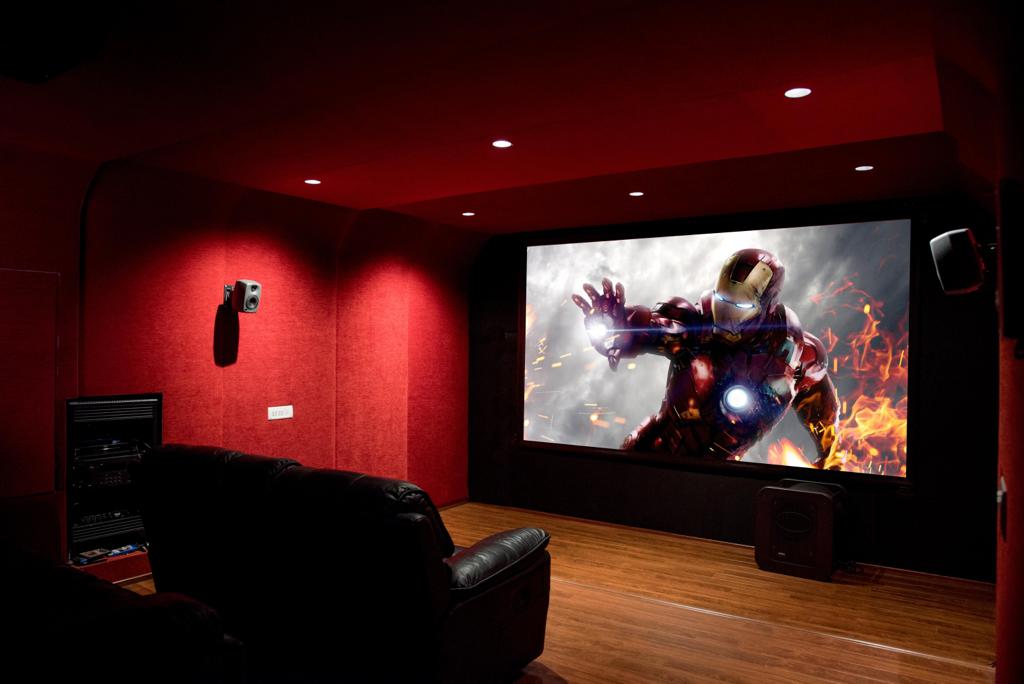
So I dug.
The more I read, the more I realized I was looking at something different entirely from what most home cinema installers use. It wasn’t about how the speakers looked or what they cost. It was about how they were built. About what Genelec has learned from 48 years of making speakers for recording studios, mastering suites, and post-production facilities. About the philosophy that sits behind every one of their designs: that a speaker’s job is to tell you the truth about what was recorded.
I needed to hear it.

I called the Genelec distributor in Mumbai. Flew down for a demo. The first Genelec I ever listened to was the 6010, a small active monitor. And it stopped me. The clarity was immediate. Not bright, not thin, not clinical. Just accurate in a way that felt alive. Warm. Present.
I came back to Bangalore and started building a listening room in Indiranagar. I began with the 8040 LCR, the 7070A subwoofer, and two 8020 surrounds. Over the years I've added the G1 speakers to my personal listening space, and those taught me something important: Genelec’s studio DNA doesn’t make speakers sound cold or sterile. It makes them honest. They sound like whatever you feed them. And when you feed them good content, they sound spectacular.

I’ve since installed Genelec in over 50 projects. The Tangerine Room uses the G Four forLCR, G Three for surrounds, and G One for overhead. The Scarlet room uses the 8040 for LCR, 8020 for surrounds, and the 7070A subwoofer. Same philosophy, different scales. And in every single one, the result is the same: rooms that sound like they were designed by someone who understands sound.

What makes an active speaker different
Most home theater speakers are passive. They’re a cabinet with drivers inside, and nothing else. You connect them to an external amplifier, run speaker cable, and hope everything works together. The amplifier could be excellent or mediocre. The impedance curve of the speaker might match the amp or might not. The crossover inside the speaker has to handle the high-level signal coming from that external amp, and all of that happens after amplification which is why it's called a passive crossover.
A Genelec is active, which means the crossover happens before amplification. The signal comes into the speaker at line level small, un-amplified and the active crossover divides it electronically. Then each driver gets its own dedicated amplifier, tuned specifically for that driver. The tweeter amp is optimized for the tweeter. The midrange amp is optimized for the midrange. The bass amp is optimized for the bass.

This is not a small thing. In a passive speaker, the crossover has to route the amplified signal between drivers that have different impedance curves at different frequencies. The inductors and capacitors in the crossover create phase shifts. These phase shifts stack up. By the time the tweeter and woofer and midrange are all playing together, they’re not actually playing at the same time. They’re slightly out of sync sometimes by just a few milliseconds, but your ear hears it as the soundstage collapses or the image falls apart.
In an active speaker, the signal path is: input → active crossover → individual amplifier → individual driver. Short. Direct. Each driver gets amplified at exactly the moment it needs to play. The phase shift is minimal. The timing is tight.
Why studios use active monitors
Genelec didn't invent active speakers. They perfected them. The company was founded in 1978 by a Finnish audio engineer named Ilpo Martikainen, and from the beginning the philosophy was simple: build a speaker that tells you the truth about what’s on the recording, nothing more and nothing less.
That’s what a reference monitor does. It’s not meant to sound beautiful or flattering or exciting. It’s meant to sound accurate. Because if you’re a mixing engineer and your speakers are coloring the sound, adding bass, or boosting the midrange, or smoothing over the rough edges then you’ll mix to those colored speakers, and your mix will sound wrong everywhere else.
Recording studios adopted active monitors because they solved that problem. When you mix on accurate speakers, your mix translates. It sounds good in a car, in a concert hall, in someone’s headphones, on earbuds. It sounds like what you intended.
Genelec’s Smart Active Monitoring (SAM) technology takes that further. SAM monitors have onboard DSP digital signal processing that actually measures your room and corrects for its acoustic problems. A Genelec SAM system can adapt itself to almost any space and deliver accurate sound regardless of where you sit or how the room reflects sound.
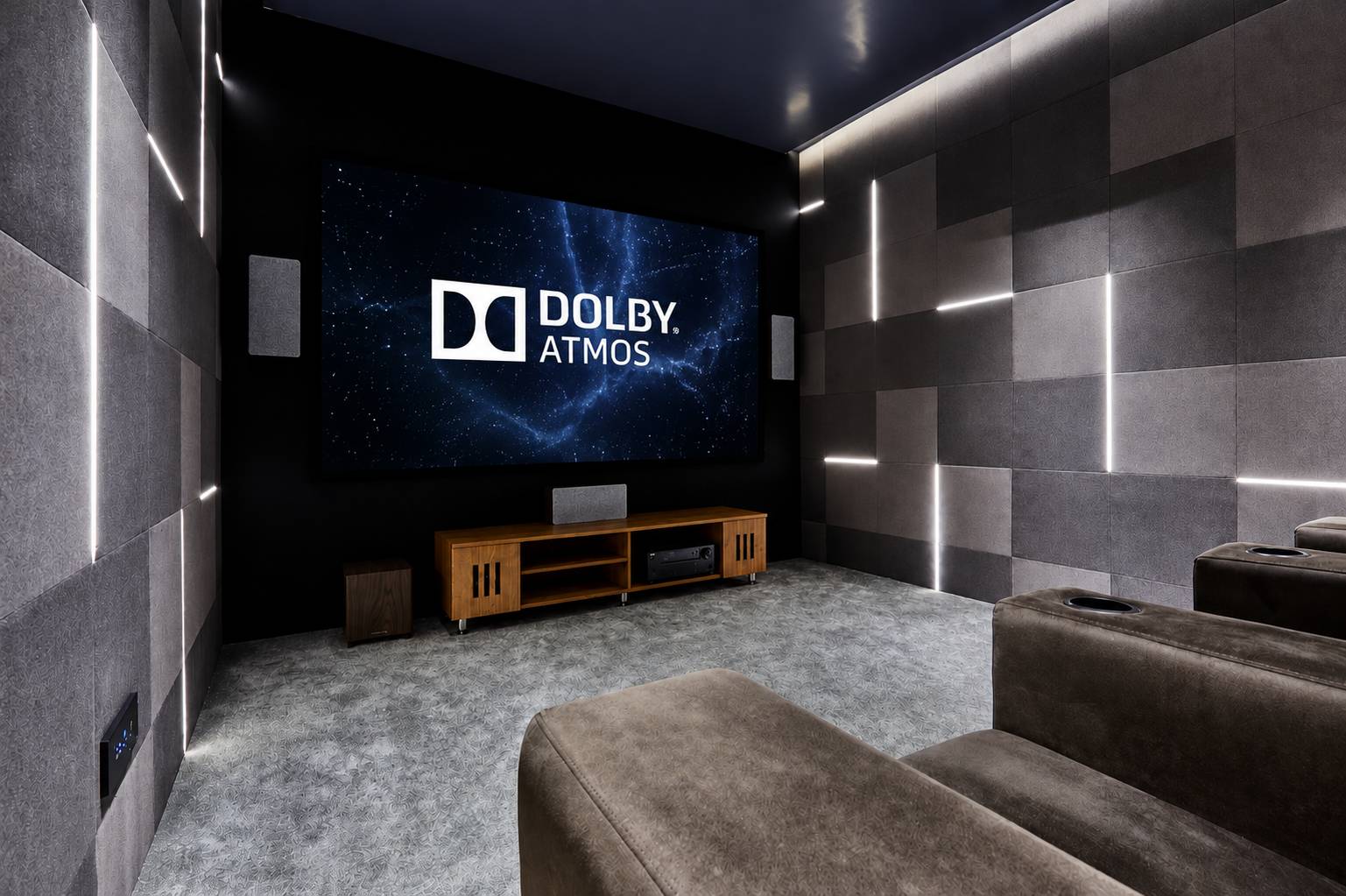
For home cinema, this is powerful. A filmmaker mixed your movie in a treated theater with reference monitors. The Dolby Atmos soundtrack was mixed on speakers that told the mixing engineer exactly what was happening. When you play that same soundtrack through a Genelec system in your home, you’re getting closer to what the filmmaker actually created than you would through most other speaker systems.

The studio philosophy in a home
Here’s what separates Genelec from almost every other speaker system used in home theater: Genelec doesn’t make compromises. They make studio speakers. Full stop.
The Tangerine Room needed to be compact, so we used the G series Genelec’s active speakers designed for homes and small studios. The G Four for LCR. The G Three for surrounds. The G One for overhead Atmos. They’re smaller than the big 8000-series studio monitors, but they follow the same active design philosophy. Same integration of amplifier and driver. Same phase coherence. Same ability to tell you exactly what’s on the recording.
The Scarlet room is larger, so we went with the 8040 LCR. Eight-zero-four-zero is a studio monitor. It’s designed for mixing engineers who need to hear every detail of what they’re working on. In a home cinema, that same monitor delivers every detail of what the filmmaker intended. The 8020 surrounds do the same thing. The 7070A subwoofer integrates seamlessly because Genelec designed it to work with those specific monitors.
Neither of these rooms sounds cold or analytical. Both sound warm. Musical. Alive. Because accuracy, when it’s done right, doesn’t sound clinical. It sounds like you’re sitting in the space where the sound was created.

What you’re actually buying
When you buy a Genelec, you’re not buying a box with a speaker driver and an amp bolted to the back. You’re buying 48 years of expertise in understanding how sound works. You’re buying the integration that can only come from a single company designing the amplifier, the crossover, and the driver together from the ground up.
You’re buying reliability. Genelec uses all-aluminum cabinets. The Iso Pod suspension system isolates the speaker from vibration. These speakers are built to last decades. They do. I’ve got projects from 15 years ago still performing flawlessly.
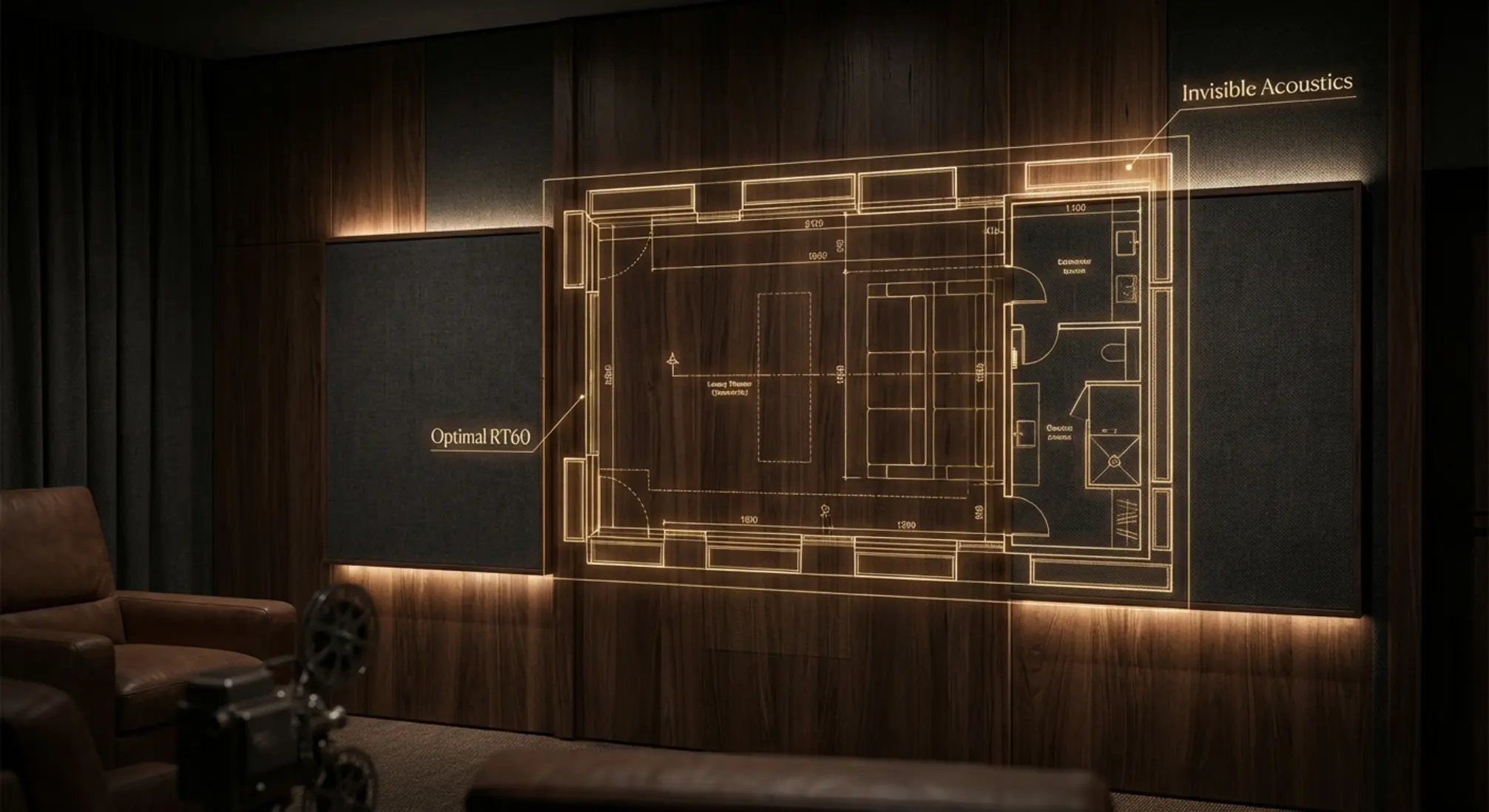
You’re buying the ability to adapt to your room. With SAM technology, Genelec monitors can measure your room’s acoustic signature and correct for it. With simple rear-panel switches on the non-SAM models, you can tailor the response to your space. You get control.
Most importantly, you’re buying the certainty that what you hear is what was intended. Not what your room wants you to hear. Not what a generic amplifier happens to deliver. What the creator mixed the content on.
That’s why we use Genelec.