Guide to Noise Control Engineering for Premium AV
Compare soundproofing methods like Mass-Spring-Mass and decoupling. Learn how to isolate luxury AV spaces and achieve STC 50+ for total audio immersion.
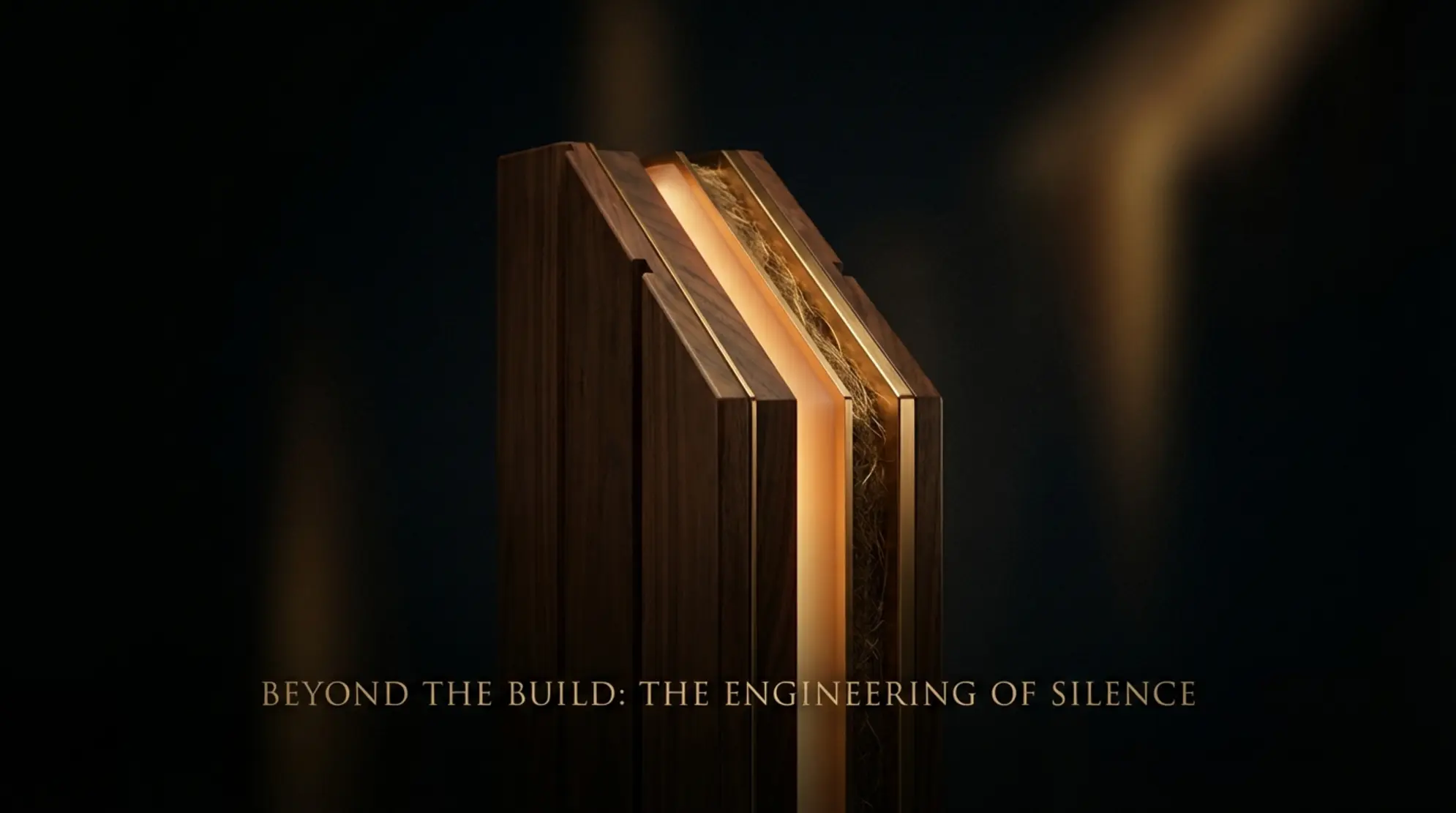
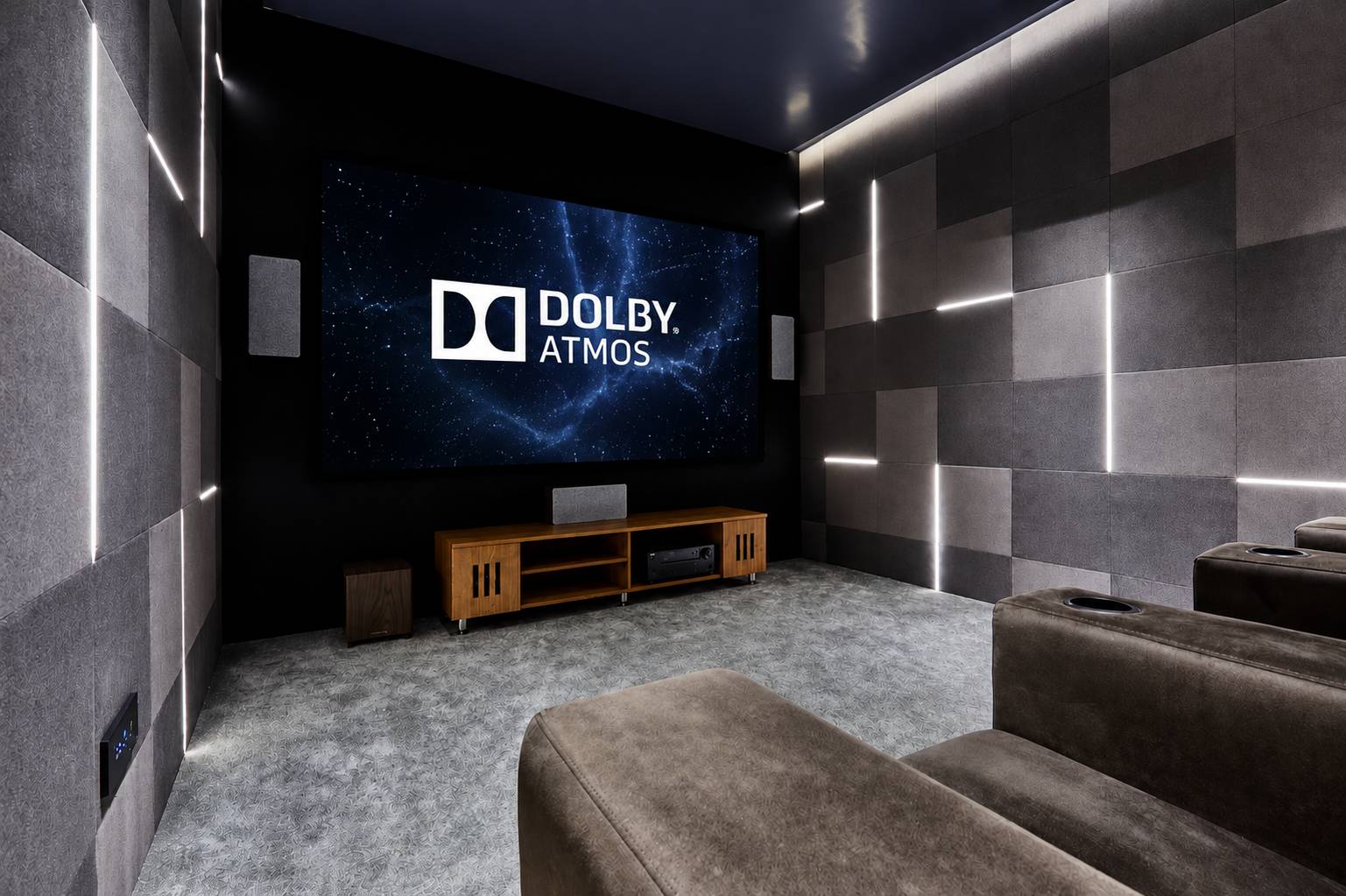
You've envisioned the perfect home theater or a confidential corporate boardroom. You’ve invested in high-end displays, top-tier projectors, and premium audio systems. But what happens when the hum of the HVAC infiltrates your movie’s quietest moments, or confidential discussions echo through thin partition walls? The truth is, without a scientifically engineered approach to soundproofing, even the most expensive AV gear falls short of its potential.
This isn't about slapping acoustic panels on a wall and hoping for the best. It's about a foundational engineering discipline—noise control—that dictates whether your premium AV investment delivers a truly immersive, fatigue-free, and private experience. For high-net-worth individuals, architects, interior designers, and corporate decision-makers, understanding these principles isn't just an option; it's a critical step in de-risking your investment and ensuring a world-class outcome.
The Premium Paradox: When Luxury Meets Lousy Acoustics
Imagine a luxury villa with a dedicated home cinema. The interior design is stunning, the equipment list is impeccable. Yet, during a critical movie scene, the rumble of traffic or the distant sounds of household activity intrude. For corporate boardrooms, sensitive discussions might seep into adjacent offices, compromising confidentiality. This is the premium paradox: a high-dollar investment in AV technology undermined by insufficient acoustic engineering. Many projects fall into this trap because they prioritize aesthetics and equipment over the physics of sound.
At HomeIsTheater, we understand that true luxury is found in the seamless integration where engineering enhances experience without compromise. Our two decades of experience, coupled with Vishwas's deep knowledge in sound design, equip us to bridge this gap, ensuring your space isn't just beautiful, but also acoustically perfect.
The Engineering Trilogy: Demystifying Noise Control
Effective noise control isn't magic; it's physics. It involves a systematic approach to both block noise from entering or leaving a space, and to refine the internal acoustics for optimal sound delivery.
1. Mass-Spring-Mass Principle: The Foundation of Superior Isolation
The most effective method for sound isolation relies on the Mass-Spring-Mass (MSM) principle. This foundational concept underpins all high-performance soundproofing.
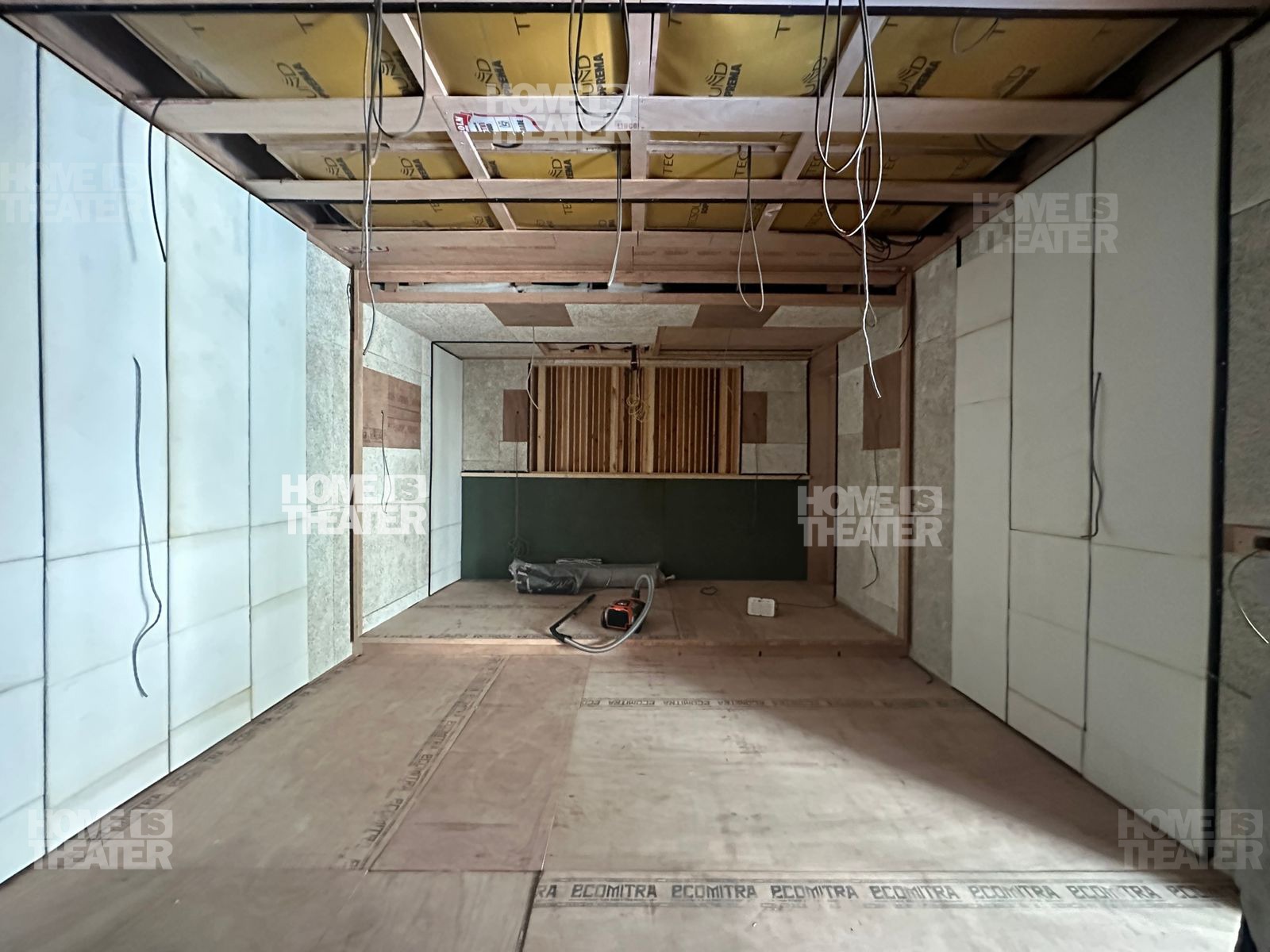
Simply put, the MSM system involves two layers of mass (e.g., drywall, concrete) separated by a resilient, sound-absorbing 'spring' element (typically an air gap, often filled with insulation). Each mass layer reflects sound, and the spring layer dissipates remaining sound energy as vibration. The wider the air gap, the more effective the "spring," and the better the low-frequency isolation.
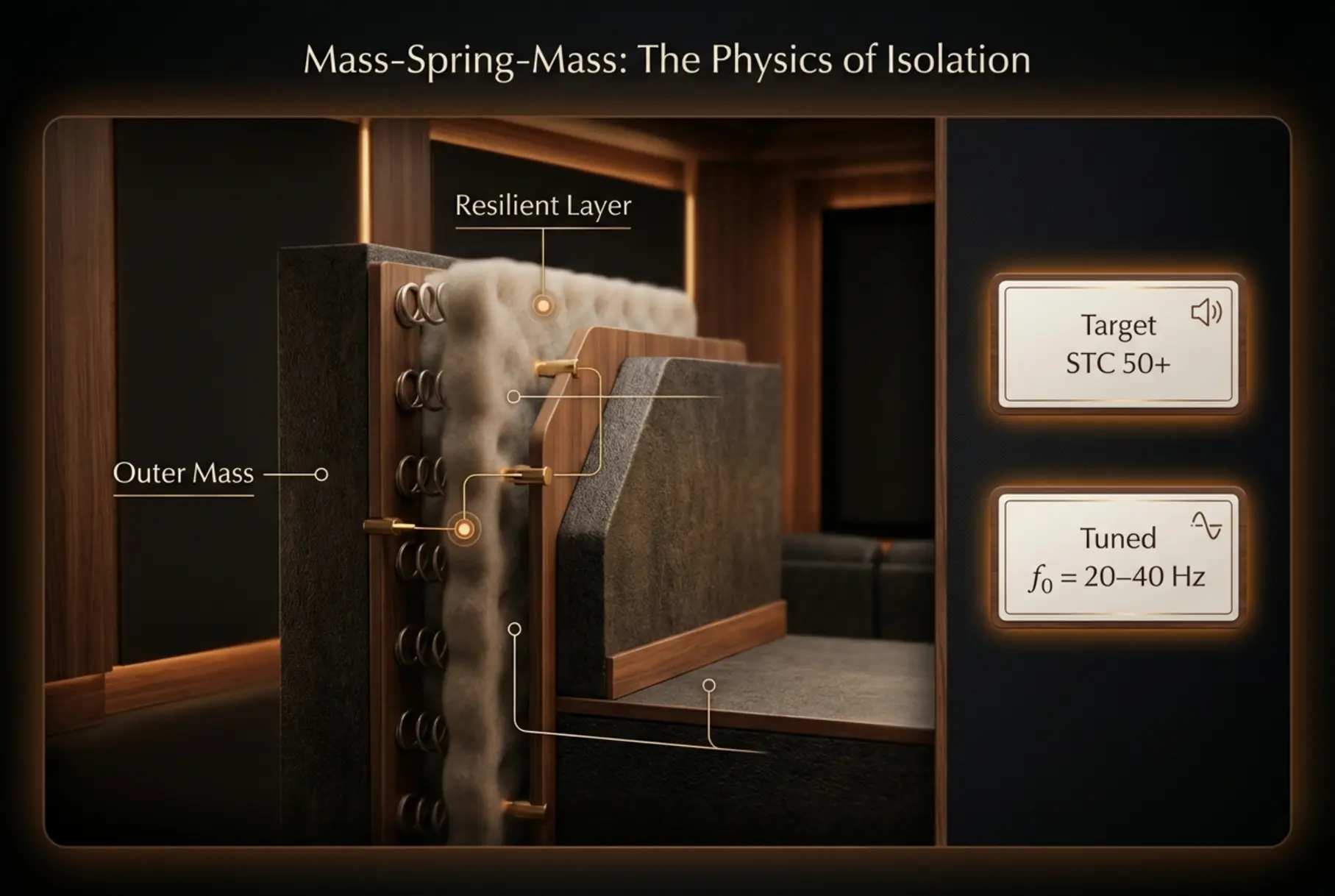
For home theaters, this translates to double-stud walls, floating floors, and decoupled ceilings. This engineering isn't optional for achieving truly immersive sound; it’s essential to prevent the vibrations from powerful subwoofers from traveling to other parts of the home or disturbing neighbors.
2. Decoupling & Damping: Moving Beyond the "Acoustic Panel" Myth
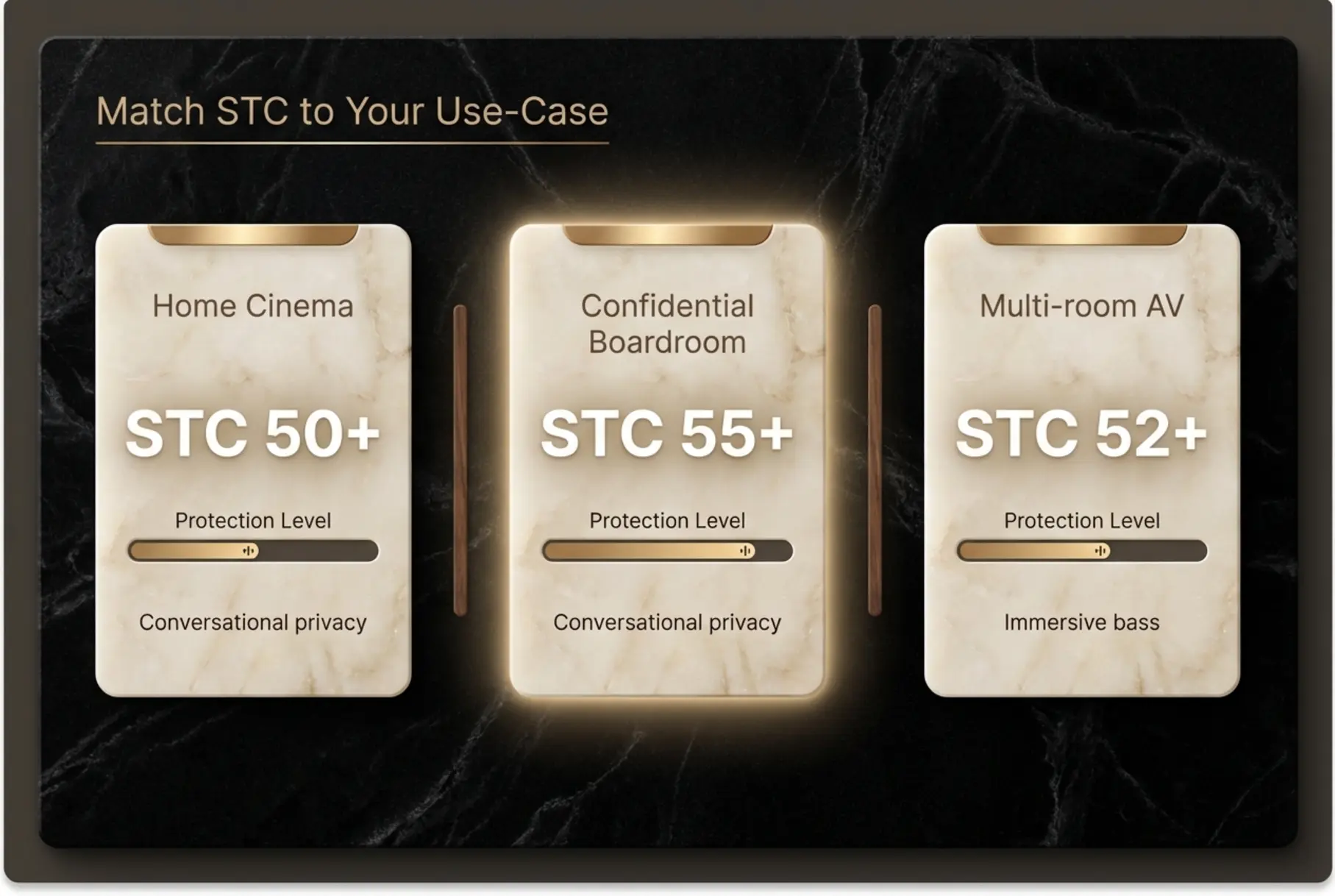
Many conflate acoustic treatment (damping) with soundproofing (isolation/decoupling). While both are crucial for a premium AV experience, they serve distinct purposes:
- Decoupling (Sound Isolation): This is the act of physically separating structures to prevent sound transfer. Techniques include using resilient clips, isolation hangers, and staggered stud walls. It's about stopping sound from traveling through a building element.
- Damping (Acoustic Treatment): This refers to controlling sound within a room to reduce echo, reverberation, and standing waves. This is where acoustic panels, bass traps, and diffusers come into play. It refines the sound experience once it's inside the room, but does little to block external noise.
Understanding this distinction is vital. As our research indicates, competitors often stop at "use acoustic panels" [Presentation People, CIAVL], ignoring the critical structural work. A truly bespoke home theater or secure boardroom demands a comprehensive strategy that addresses both.
3. Flanking Noise Forensics: Mapping the Hidden Paths
Even with perfectly designed walls, floors, and ceilings, sound can find alternative routes—these are known as flanking paths. These hidden conduits compromise even the best soundproofing efforts.
Flanking noise can travel through:
- HVAC Ducts: Unlined or improperly routed, these act as speaking tubes.
- Electrical Outlets & Light Fixtures: Penetrations create weak points.
- Joists & Structural Beams: Vibrations can transfer directly through common structural elements.
- Window and Door Gaps: Even tiny cracks can significantly undermine sound isolation.
- Pipe Chases: Plumbing lines often provide direct paths for noise.
Addressing flanking noise requires a forensic approach and meticulous detailing during the design and construction phases. This often involves specific seals, anti-vibration mounts, acoustic caulk, and carefully planned layouts to eliminate these sonic leaks.
The Predictive Edge: Engineering Before Construction
The cost of fixing acoustic issues after construction is exponentially higher than addressing them during the design phase. This is why tools for predictive modeling are invaluable for premium AV installations.
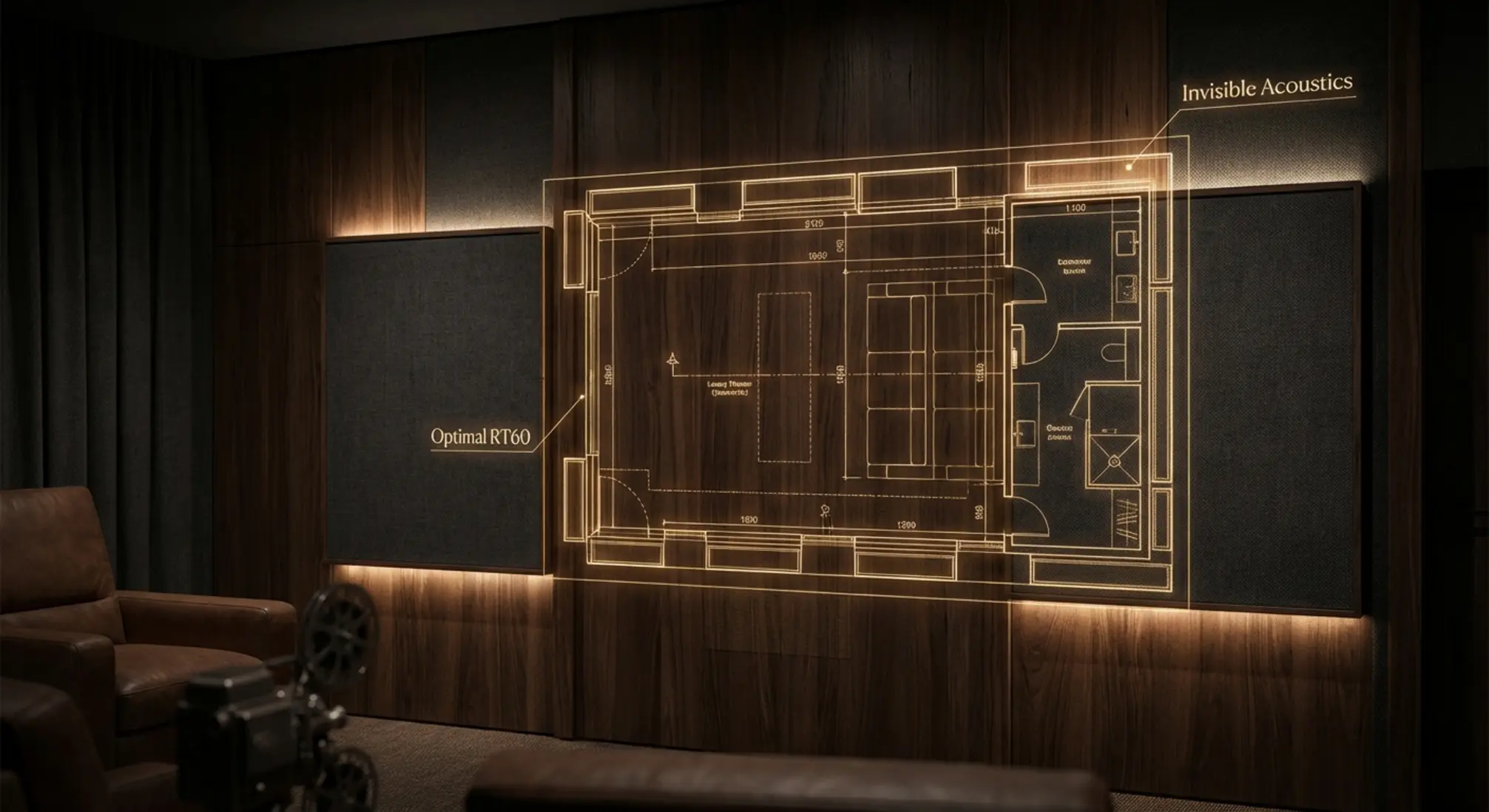
We utilize industry-leading software like EASE and ODEON, which are considered "Gold Standards" for acoustic simulation [1, 5]. These tools allow us to create virtual models of your space and predict how sound will behave within it—and how much external noise will intrude—before a single wall is framed. This includes:
- Meticulous planning, as seen in our home automation solutions, extends to every aspect of our AV projects to ensure seamless integration.
- Identifying potential flanking paths and proposing mitigation strategies.
- Optimizing room dimensions and material choices for ideal acoustics.
- Ensuring STC (Sound Transmission Class) targets are met, a crucial benchmark for noise reduction between spaces.
While tools like REW (Room EQ Wizard) are excellent for post-installation measurement and calibration, EASE and ODEON offer the proactive intelligence needed to guarantee performance upfront.
Selection Criteria for Discerning Buyers: STC Rating Guide
When evaluating soundproofing solutions, the Sound Transmission Class (STC) rating is your most critical metric. It measures how well a building element reduces airborne sound. A higher STC rating means better sound isolation.
Our goal is often an STC of 50 or higher, a benchmark considered critical for blocking conversational noise and ensuring privacy in multi-purpose AV environments [4]. Here’s a basic mapping of STC targets to specific AV use-cases:
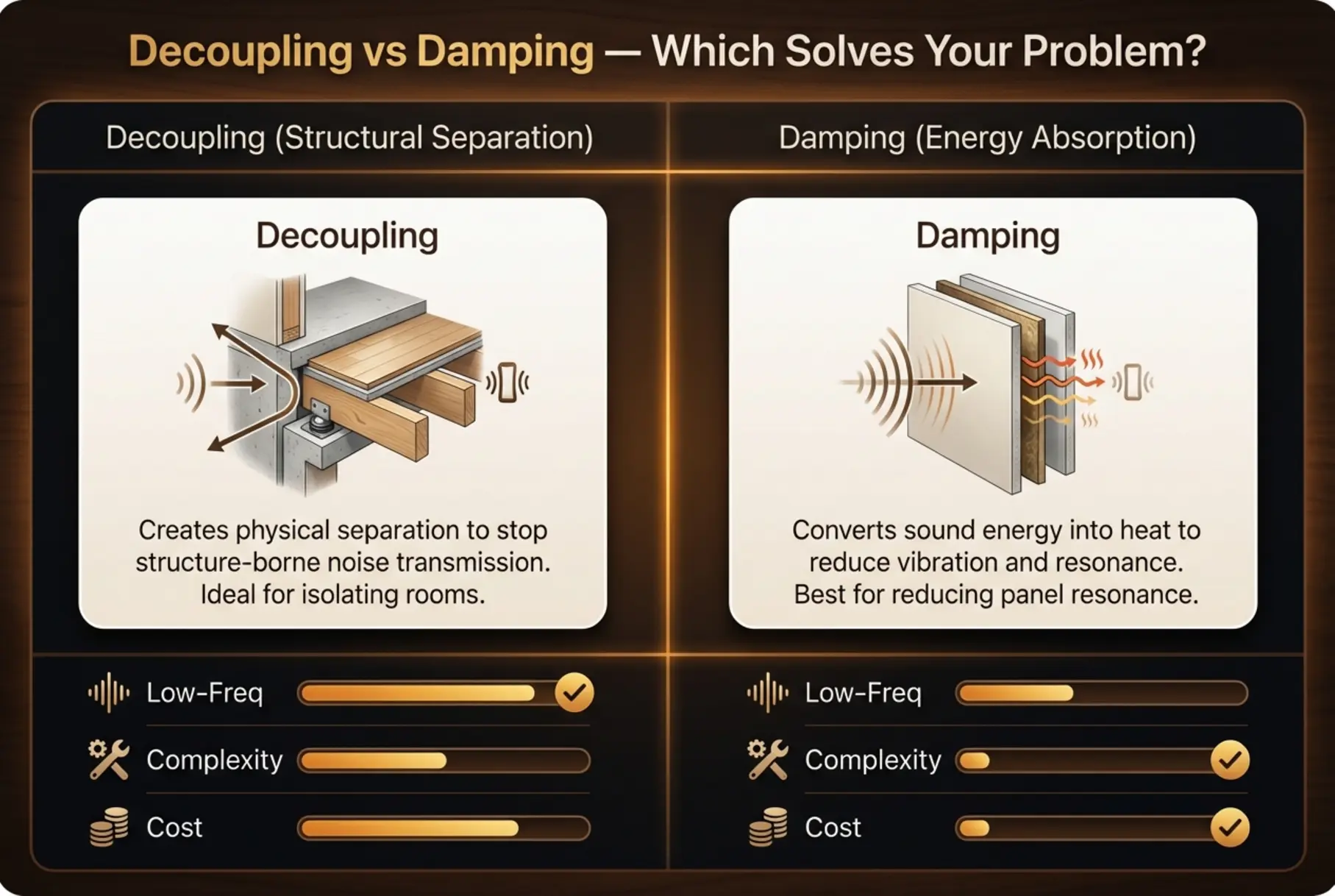
- Dedicated Luxury Home Theater: Targeting STC 55-65 is ideal. This level ensures external sounds are virtually inaudible, allowing for pure immersion, and prevents high-SPL (Sound Pressure Level) impact from disturbing other parts of the home.
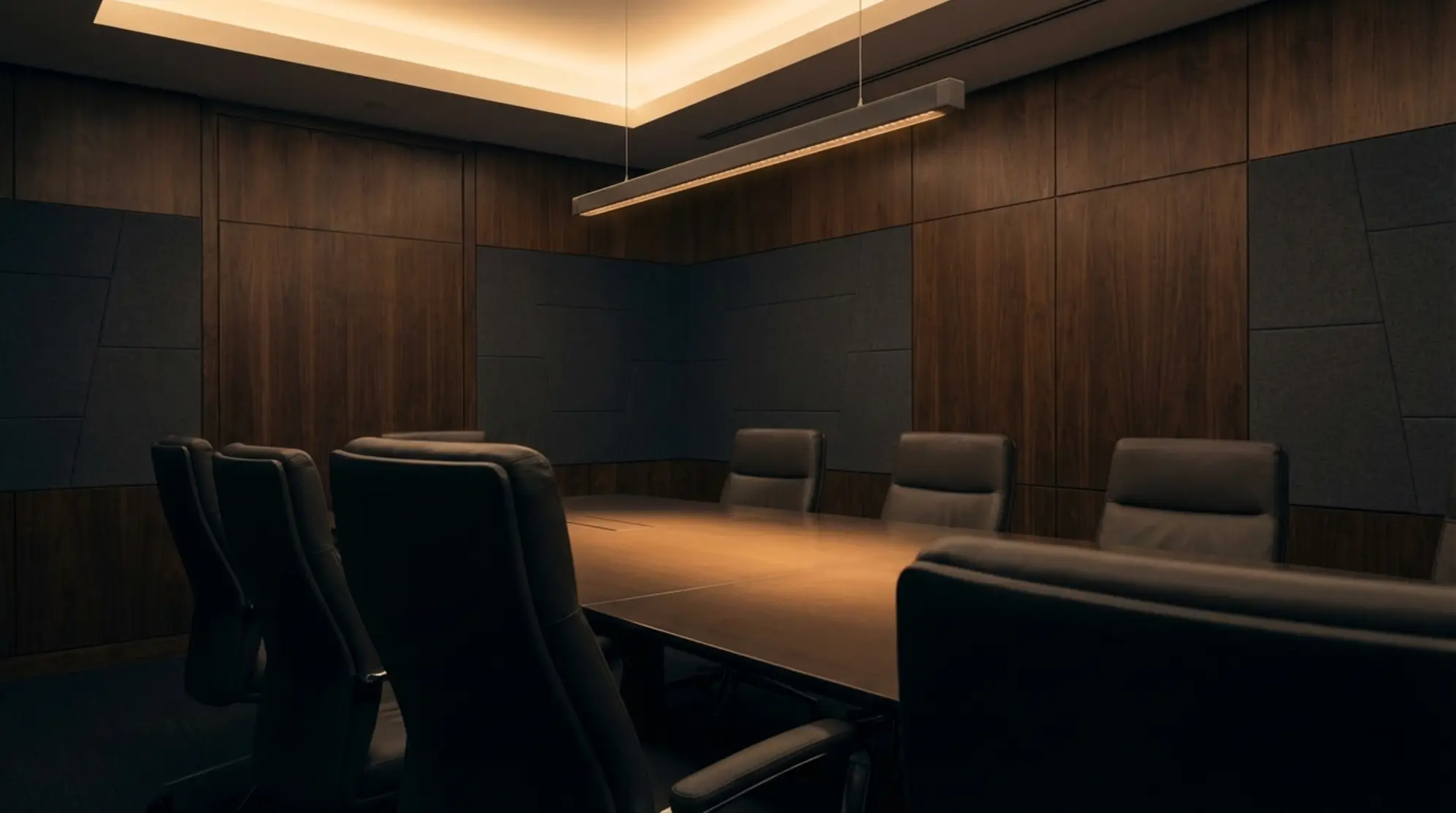
- Confidential Corporate Boardroom/Meeting Room: STC 50-55 is crucial to maintain speech privacy and prevent sensitive information leakage.
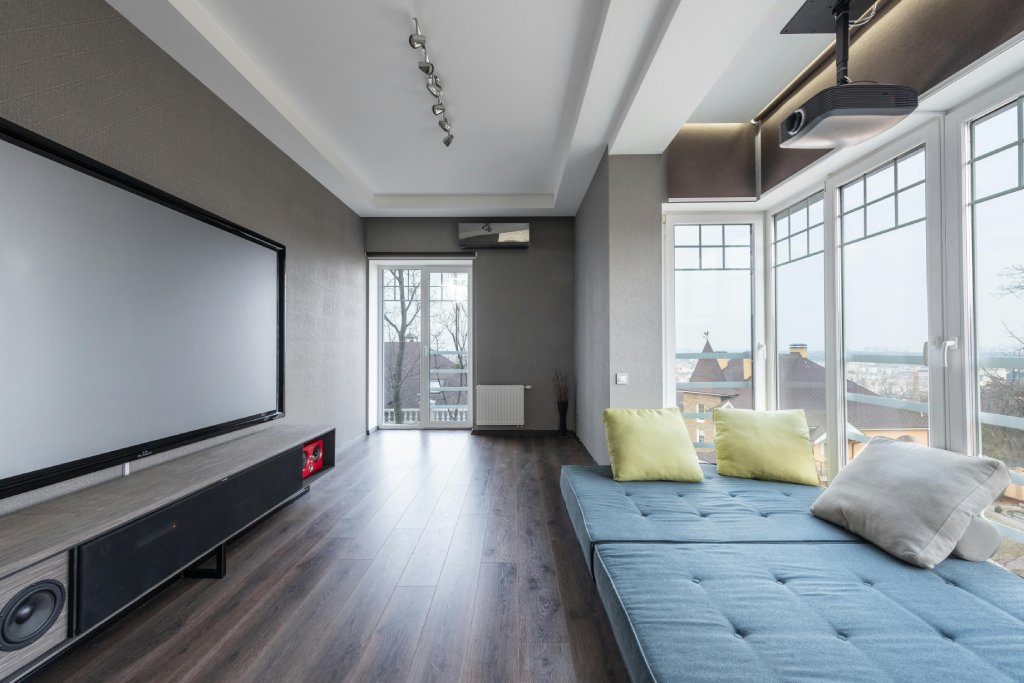
- Multi-purpose Media Room (e.g., in a living room): While not fully isolated, an STC of 45-50 can significantly improve the experience by reducing common household noises. Achieving this requires careful material selection and construction.
- Commercial Auditoriums/Classrooms: STC 50+ is essential for speech intelligibility and preventing distractions from adjacent spaces, particularly for distance learning setups or interactive whiteboard solutions.
Understanding these benchmarks helps you evaluate proposals and ensures your investment aligns with your desired acoustic performance.
Is Your Room Structurally Ready for Immersive Audio? An Interactive Checklist
Before diving into equipment selection, assess your space. Consider these critical questions to gauge your room's acoustic potential, helping you plan your perfect home theatre project:
- Is the room dedicated, or is it part of a multi-functional living space?
- What are the primary external noise sources (traffic, neighbors, HVAC units)?
- Are there common walls, floors, or ceilings with other occupied spaces?
- What is the current ceiling height? (Optimal natural acoustics often begin at 12-14ft [2]).
- What are the existing wall and ceiling construction materials?
- Are there windows or doors directly facing external noise sources?
FAQs: Addressing Your Evaluation Concerns
Q1: Can my interior designer handle the soundproofing, or do I need an acoustic engineer?
While interior designers are crucial for aesthetics, advanced soundproofing involving Mass-Spring-Mass systems, nuanced vibration isolation techniques, and predictive acoustic modeling (EASE/ODEON) requires specialized acoustic engineering expertise. Relying solely on an interior designer for complex sound control can lead to costly retrofits if not adequately addressed. We often collaborate directly with architects and interior designers to integrate acoustic engineering seamlessly into the overall design.
Q2: What's the biggest mistake people make with home theater soundproofing?
The most common mistake is focusing purely on internal room acoustics (damping with panels) while neglecting sound isolation (stopping sound from entering or leaving the room). This leads to a room that sounds good inside but still allows external noise intrusion or internal sound leakage, compromising the immersive experience or privacy. Effective soundproofing starts with the fundamental structure, not just surface treatments.
Q3: How much does professional soundproofing add to the cost of a luxury AV installation?
This varies significantly based on desired STC ratings, room size, existing construction, and specific treatments (e.g., floating floors, sound-rated doors/windows). However, considering the high cost estimates for a premium home theater in Bangalore, soundproofing costs are a proportionate investment that preserves the value and performance of the entire system. It's often a fraction of the total AV equipment cost but delivers disproportionately high value in terms of experience and privacy. Investing upfront in professional design and execution prevents expensive and often suboptimal fixes later.
Q4: My current home theater sounds hollow. Is that a soundproofing or acoustic issue?
A "hollow" sound typically points to an internal acoustic issue, specifically excessive reverberation caused by too many reflective surfaces and insufficient absorption. This is an acoustic treatment problem that can be addressed with strategically placed acoustic panels, diffusers, and bass traps, rather than a sound isolation problem. Our expertise in designing silence: why acoustics make or break your home theater explains this further.
Q5: How do you handle vibration from subwoofers or large loudspeakers?
Vibration isolation is critical for powerful AV systems. We employ techniques such as:
- Floating floors: Decoupling the floor from the structural slab.
- Resilient mounts for speakers: Preventing direct transfer of vibration to surfaces.
- Dedicated speaker platforms: Often sand-filled or mass-loaded to absorb vibration.
- Isolation pads and risers: For equipment placed directly on floors or shelves.This prevents low-frequency sound energy from flanking through the building structure and disturbing other areas, enhancing the purity of your audio experience.
Building the Future of Immersive AV, Foundation First
At HomeIsTheater, our approach is holistic. We don't just specify equipment; we engineer environments. From the initial consultation on acoustic design to the final calibration, every detail is meticulously planned. Our expertise ensures that whether you're creating a serene escape in a luxury villa or a cutting-edge communication hub in a corporate office, your AV investment is built on a foundation of scientific precision.
We invite you to experience the difference. Visit our demo room in Bangalore to truly understand the impact of expertly engineered sound. Or, begin the conversation about your next project with a free 15-minute consultation to explore how we can bring your vision of perfect sound and immersive visuals to life.